9 Ways to Get Your Home Ready Before the Cold Hits
The first genuinely cold morning always seems to catch people off guard, even though it happens every single year. A little bit of work now, while the weather is still mild, saves you from scrambling once temperatures actually drop and everyone else is trying to book the same repair appointments.
None of this takes a whole weekend. Most of these can be knocked out in an afternoon, spread across a couple of weekends if you would rather take it slow.
The tasks below are roughly in order of how urgent they are. If you only get through a few, start from the top.
Here are nine things worth doing before the cold weather sets in.
1. Check Your Furnace or Heating System Now, Not in December
Waiting until the first cold snap means you are competing with everyone else for a repair appointment, right when you need heat the most. A quick check now, including changing the filter, catches small issues before they become no-heat emergencies.
If it has been more than a year since a technician looked at your system, this is a good year to schedule that visit. A yearly checkup tends to be far cheaper than an emergency repair in January.
Tip: Write the filter size on your calendar reminder so you are not searching for it later.
2. Seal Gaps Around Doors and Windows
Cold air finds its way in through the smallest gaps, and a drafty house costs more to heat all season long. Weatherstripping and draft stoppers are cheap and take about ten minutes per door.
Run your hand slowly around window and door frames on a windy day. If you feel air moving, that is a spot worth sealing.
A drafty older home can lose a surprising amount of heat this way, and the fix is often a single tube of caulk or a roll of foam tape, not a full window replacement.
3. Clean Out the Gutters
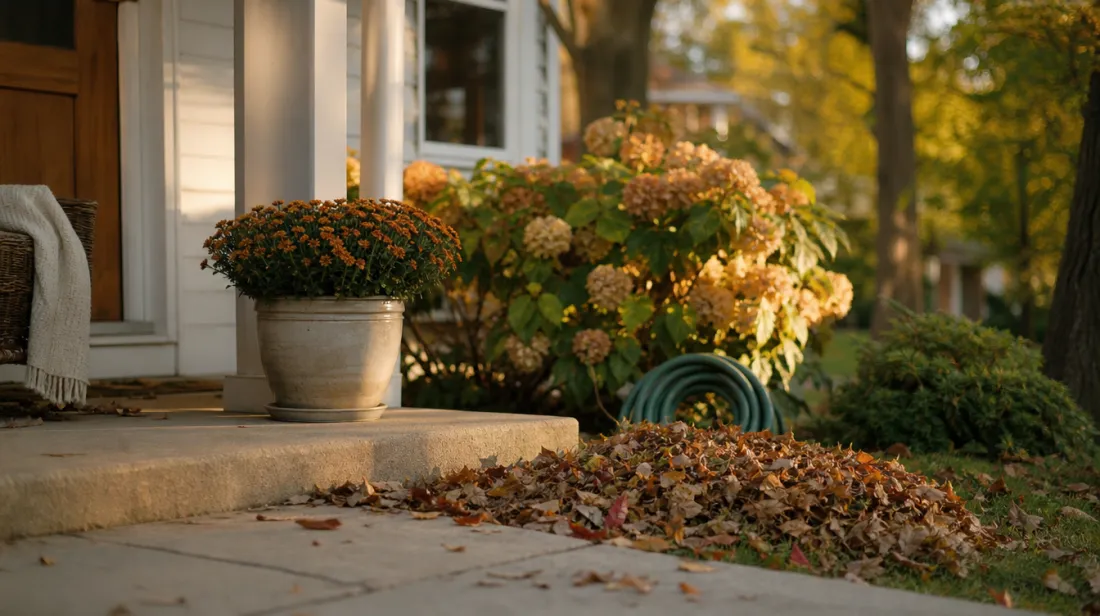
Leaves pile up fast in early autumn, and clogged gutters can send water where it does not belong once heavier rain or the first freeze hits. A clear gutter also prevents ice buildup that can damage the roofline later in the season.
If getting on a ladder is not something you can safely do, this is a good task to hire out. A gutter cleaning service is inexpensive compared to the water damage a clogged gutter can eventually cause.
Tip: Do this after most of the leaves have fallen so you are not doing it twice.
4. Disconnect and Drain Outdoor Hoses
A hose left connected to an outdoor spigot can cause the pipe to freeze and crack once temperatures drop below freezing. Disconnect it, drain any remaining water, and store it somewhere dry.
If your home has an outdoor spigot shutoff valve inside, this is also a good time to close it for the season, which adds an extra layer of protection against a frozen pipe.
5. Flip Your Ceiling Fans to Run Clockwise
Most ceiling fans have a small switch on the base that reverses the blade direction. Running them clockwise on a low setting in colder months pushes warm air that collects near the ceiling back down into the room.
It is a small change, but it can make a room feel noticeably warmer without touching the thermostat, which is worth trying before you turn the heat up higher than you need to.
6. Check Your Roof for Loose or Missing Shingles
A few minutes looking at your roof from the ground, or a quick walk around the outside of the house, can catch a problem before winter weather makes it worse. A small repair now is almost always cheaper than water damage later.
7. Restock Your Cold-Weather Emergency Basics
A flashlight with working batteries, a few extra blankets within easy reach, and any medication you rely on should be somewhere you can find quickly if the power goes out during a storm. Checking this now, while nothing urgent is happening, means you are not searching in the dark later.
Tip: Keep a small battery-powered radio in the same spot as your flashlight.
8. Bring In or Cover Outdoor Furniture and Plants
Cushions, delicate plants, and anything that will not hold up to frost should be brought inside or covered before the first hard freeze. Waiting until a cold snap is forecast means doing it in a rush.
9. Test Smoke and Carbon Monoxide Detectors
Heating systems run more in colder months, which makes this the right time to test detectors and replace batteries if needed. This one takes five minutes and is easy to put off indefinitely if you do not set a specific date for it.
While you are at it, check the expiration date on the detectors themselves. Most need to be replaced entirely every ten years, not just have their batteries swapped, and the manufacture date is usually printed on the back.
The Bottom Line
None of these tasks are complicated on their own, but doing them now, while the weather is still mild, means you are not dealing with any of them in a rush once it actually gets cold. Pick two or three to tackle this weekend and work through the rest over the next couple of weeks.
A little bit of prep in early autumn tends to make the whole winter feel more manageable, and most of these tasks only need to be done once a year to keep your home in good shape through the coldest months.