6 Pantry Tricks That Keep Bugs and Stale Air Out
Nothing ruins a baking afternoon like reaching for the flour and finding it has gone stale, or worse, finding something moving in it that should not be there.
Most pantry problems come down to two things: air getting in where it should not, and food sitting around longer than it needs to. Fix those, and your pantry stays fresher with almost no extra effort.
Here are six habits that make a real difference.
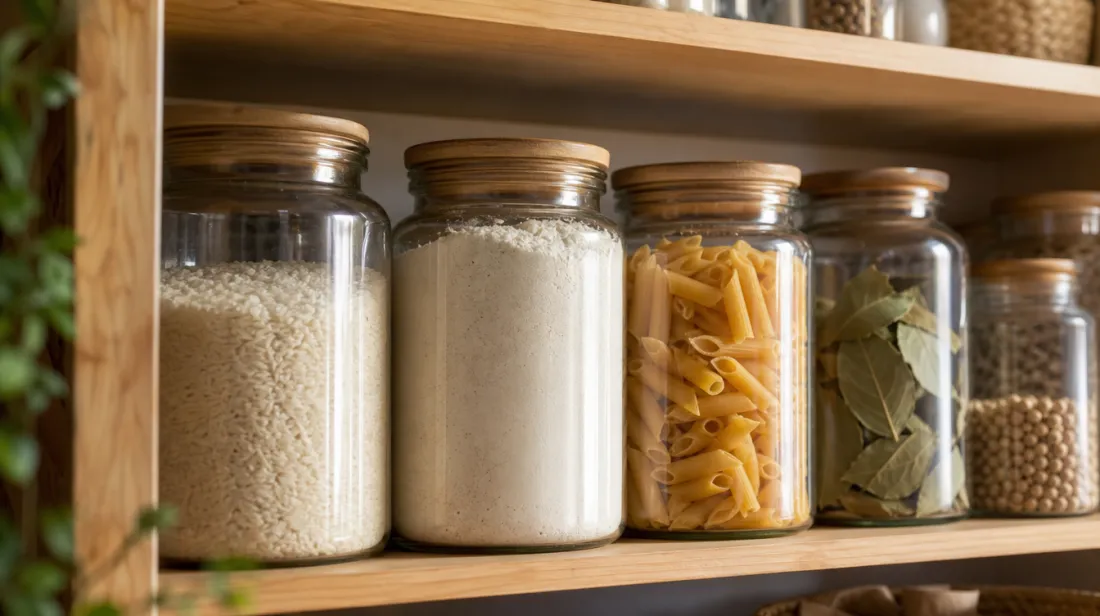
1. Move Dry Goods Into Airtight Containers
The bags that flour, rice, and cereal come in are not designed to stay sealed once opened. Every time you fold the bag closed, a little more air and moisture sneaks in, and that is exactly what invites pests and staleness.
Pouring dry goods into airtight containers as soon as you open them keeps air out for good and makes it much harder for pantry moths to get a foothold.
Tip: Glass or hard plastic containers work better than bags for this, since pests can chew through thin plastic.
2. Freeze New Bags for Four Days Before Storing
Pantry moths and weevils sometimes come home with the flour or grain itself, as eggs too small to see. Putting a new bag in the freezer for about four days kills off anything that might be hiding inside before it has a chance to hatch and spread.
This one extra step at the store is one of the most effective ways to stop an infestation before it starts.
3. Tuck a Bay Leaf Into Grain Containers
Bay leaves have a strong scent that many common pantry pests avoid, which is why cooks have tucked a leaf or two into flour and rice containers for generations. Drop one whole leaf into each container of grain, rice, or pasta.
Replace it every few months, since the scent fades over time and loses its effect.
4. Rotate Older Items to the Front
It is easy to grab whatever is closest, which means new boxes often get used up while older ones sit forgotten in the back. Every time you put groceries away, move older items to the front and put new ones behind them.
This one habit, sometimes called first in, first out, means nothing quietly expires behind a newer box of the same thing.
Tip: Write the purchase date on the bottom of cans and boxes with a marker so you always know what is oldest at a glance.
5. Keep the Pantry Cool, Dark, and Dry
Heat and light break down oils in flour, nuts, and grains faster, which is part of why food stored near a stove or in direct sunlight goes stale sooner than food stored in a cool cupboard. Moisture is just as much of a problem, since it invites both mold and pests.
If your pantry is near a heat source like the oven, consider moving your most sensitive items, like nuts, whole grain flour, and oils, to a cooler spot in the kitchen.
6. Wipe Down Shelves Between Grocery Trips
Crumbs and spilled grains left on shelves are an open invitation for pests, even if every container itself is sealed tight. A quick wipe down with a damp cloth every time you put away a big grocery haul removes anything that might attract unwanted visitors.
Tip: Pay extra attention to the corners and back edges of shelves, where crumbs tend to collect unnoticed.
Check Spices Once a Year and Toss What Has Faded
Spices do not spoil the way fresh food does, but they do lose their punch over time, especially ground spices, which fade faster than whole ones. A spice that smells weak when you open the jar will not do much for your cooking no matter how much you use.
Set aside a few minutes once a year to smell through your spice cabinet and toss anything that has gone faintly musty or lost its scent. This keeps the shelf useful instead of cluttered with jars you never reach for.
Tip: Store spices away from the stove, since heat speeds up how fast they lose their flavor.
Keep a Small Notepad Inside the Pantry Door
A lot of pantry waste comes from simply forgetting what you already have and buying duplicates at the store. A small notepad taped to the inside of the pantry door lets you jot down items as they run low, so your next grocery list is already half written.
This small habit also helps you notice when something has been sitting untouched for months, which is a good sign to either use it soon or find out why it never gets picked.
The Bottom Line
A well-kept pantry is not about buying fancy containers or overhauling your whole kitchen. It is a handful of small habits, done consistently, that keep air, moisture, and pests from ever getting a chance.
Start with airtight containers and the freezer trick for new bags, and the rest will start to feel like second nature.