Store Your Herbs Like a Bouquet of Flowers, Here's Why
You bring home a bunch of fresh parsley or cilantro with big plans to use it all week, and by day three it is already wilted and slimy in the crisper drawer.
Herbs are one of the fastest things to go bad in the kitchen, mostly because we store them the wrong way. Treating them like a bouquet of flowers instead of a bag of vegetables makes a bigger difference than you would expect.
Here is why it works and how to set it up.
Why It Works
Fresh herbs are essentially small, delicate plants, and like any cut plant, they keep drawing up water through their stems after they have been cut. A bag in the crisper drawer cuts off that water supply and traps the herbs in their own humidity, which speeds up wilting and mold.
Standing the stems in water, the same way you would with cut flowers, lets the herbs keep drinking and stay hydrated far longer than they would sealed in a bag.
How to Set It Up
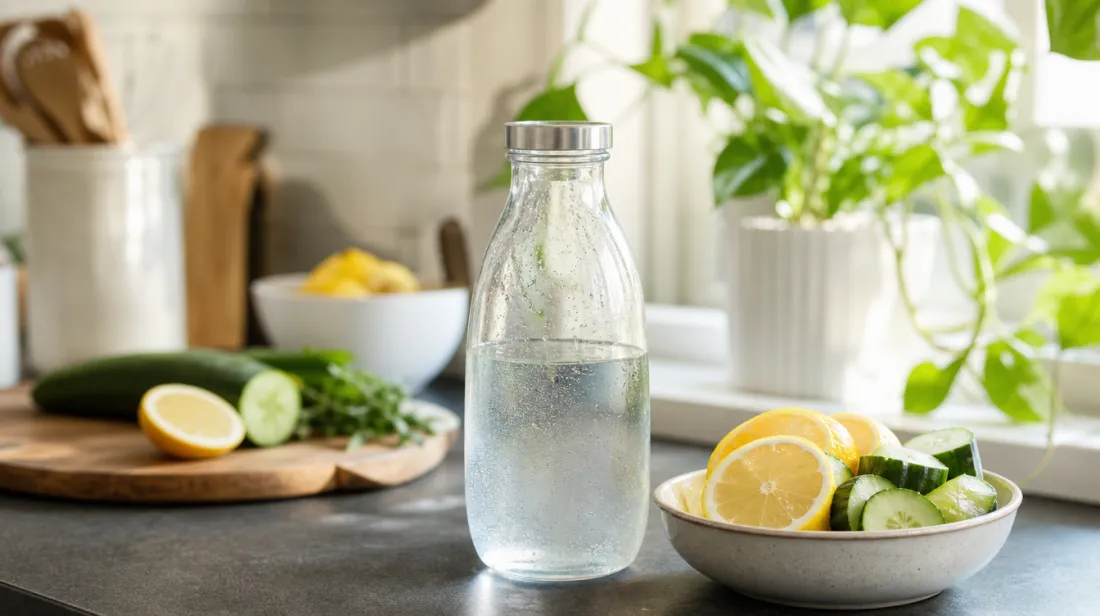
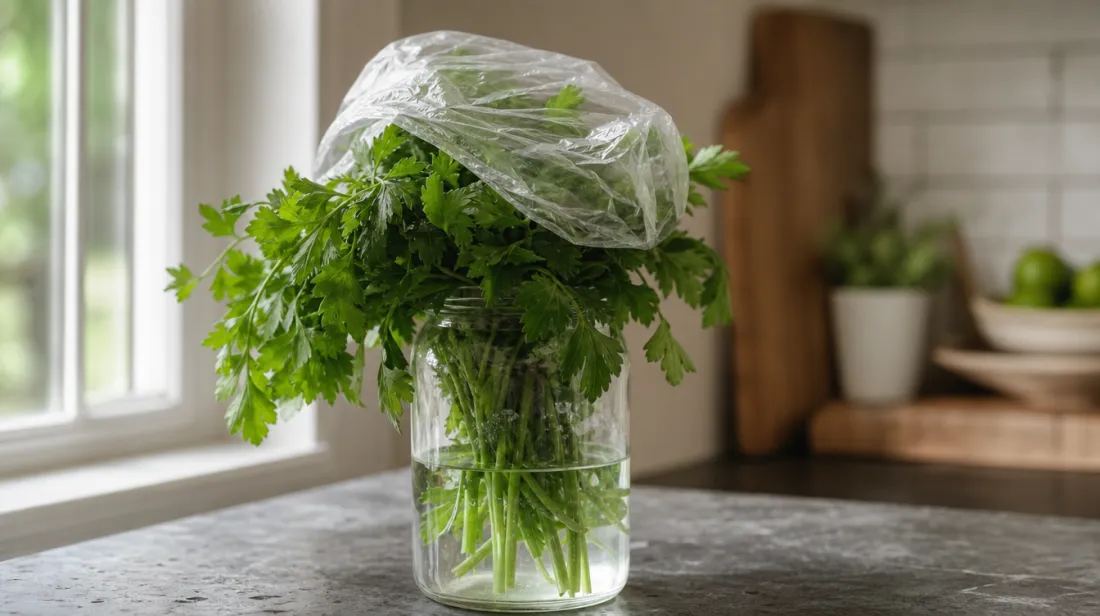
Trim about half an inch off the bottom of the stems, the same way a florist would trim flowers before arranging them. Stand the herbs upright in a jar with an inch or two of water covering the stems.
Loosely cover the top with a plastic bag, without sealing it tightly, and place the jar in the fridge for most herbs, or on the counter out of direct sun for basil specifically.
Tip: Basil is the one exception that prefers room temperature. Cold fridge air can turn its leaves dark and bruised.
What to Watch Out For
Change the water every few days, since sitting water can grow bacteria just like it would in a vase of flowers. Cloudy or smelly water is a sign it is time for a change, even if the herbs still look fine.
Also make sure no leaves are submerged in the water itself, only the stems, since leaves sitting in water tend to rot faster than they would otherwise.
How Long It Actually Extends Freshness
Herbs stored loose in a bag typically last three to five days before they start to wilt or turn slimy. Stored upright in water like a bouquet, many herbs including parsley, cilantro, and mint can stay fresh for one to two weeks, sometimes longer.
That difference alone can mean using an entire bunch of herbs instead of throwing half of it away.
Tip: If a few leaves start to yellow, pluck them off right away so they do not speed up decay in the rest of the bunch.
A Bonus Trick for Leftover Herbs
If you only used a few sprigs and have more than you can use before they wilt, chop the rest and freeze them in an ice cube tray with a little water or olive oil. Pop out a cube straight into a soup or sauce whenever you need a quick burst of flavor.
This works especially well for herbs like thyme, rosemary, and oregano that you tend to use in small amounts anyway.
Which Herbs This Works Best For
Soft-stemmed herbs respond best to this method, including parsley, cilantro, mint, dill, and basil. Woody herbs like rosemary, thyme, and sage have tougher stems that do not draw up water the same way, so they do better wrapped loosely in a slightly damp paper towel and kept in the fridge instead.
Knowing which method fits which herb saves you from wasting a jar of water on something that was not going to benefit from it anyway.
Why This Beats Buying a Special Herb Keeper
Stores sell dedicated herb keeper containers that work on a similar idea, but a plain jar you already own does the same job for free. The water and the loose plastic bag are doing the actual work, not the shape of the container holding them.
Tip: A tall glass or an empty jam jar works just as well as anything purpose-built, as long as it is tall enough to support the stems upright.
Where to Put the Jar in Your Fridge
Placement matters almost as much as the jar itself. Keep the jar somewhere it will not get knocked over every time the door opens, like a corner of a shelf rather than the door itself, since the door sees the biggest temperature swings every time it opens and closes.
Giving the herbs a stable, consistent spot means less handling and fewer bruised leaves over the course of the week, which helps them hold up even longer than the water alone would manage.
The Bottom Line
Herbs are not built to survive being sealed in plastic and forgotten in the crisper drawer. They are built to keep drinking water, even after they have been cut from the plant.
Next time you bring home a bunch, skip the bag and give them a jar of water instead. It costs nothing and it means far less wasted food by the end of the week.